
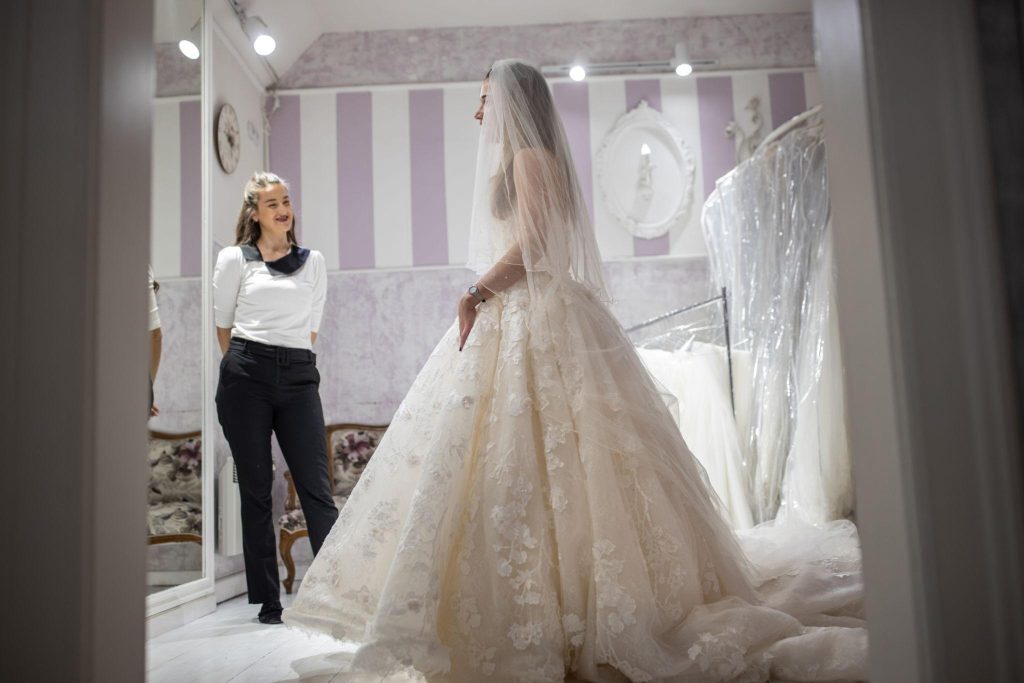

Choosing a wedding gown is one of the most meaningful style decisions a bride will make. Beyond trends and traditions, the right dress reflects personality, enhances confidence, and complements the overall wedding vision. This guide walks through every essential detail—from silhouettes and fabrics to budgeting and fittings—so you can find a gown that feels unmistakably yours.
Understanding Wedding Dress Silhouettes
The silhouette shapes the overall look and determines how a gown fits and flows. Knowing the differences helps narrow down options quickly.
A-Line
- Fitted at the bodice and gradually flares from the waist
- Universally flattering
- Works well for both formal and outdoor weddings
Ball Gown
- Fitted bodice with a dramatic, full skirt
- Ideal for traditional or grand venues
- Accentuates the waist beautifully
Mermaid
- Fitted through the bodice, hips, and thighs
- Flares out at or below the knees
- Creates a bold, glamorous statement
Sheath
- Slim, straight silhouette
- Minimal and modern
- Ideal for beach or destination weddings
Fit-and-Flare
- Similar to mermaid but less dramatic
- Offers shape while allowing easier movement
Tip: Try on styles you might not initially consider. Many brides discover unexpected favorites during fittings.
Choosing the Right Fabric
Fabric affects how a dress drapes, photographs, and feels throughout the day.
Popular Fabric Options
- Satin: Smooth and structured with a subtle sheen
- Lace: Romantic and timeless, often layered over other fabrics
- Tulle: Lightweight and airy, common in ball gowns
- Chiffon: Soft, flowing, and ideal for warm-weather weddings
- Organza: Crisp and lightweight with slight stiffness
Consider the season and venue. Heavier fabrics suit cooler months, while breathable materials are better for summer celebrations.
Matching the Dress to Your Body Shape
Every body type is beautiful. The goal is to highlight features you love while ensuring comfort.
- Hourglass: Most silhouettes complement balanced proportions
- Pear-shaped: A-line and ball gowns balance wider hips
- Petite: Sheath and A-line styles elongate the frame
- Athletic: Mermaid or embellished bodices create curves
- Plus-size: Structured bodices and supportive fabrics enhance shape beautifully
Focus on fit rather than size labels. Bridal sizing often differs from everyday clothing.
Aligning with Your Wedding Theme
Your venue and theme can influence design choices.
- Rustic Barn Wedding: Lace, bohemian sleeves, soft silhouettes
- Beach Ceremony: Lightweight chiffon or sheath styles
- Classic Ballroom: Satin ball gowns or structured A-lines
- Modern City Wedding: Clean lines, minimalist silhouettes
The gown should harmonize with the setting while still reflecting your personality.
Setting a Realistic Budget
Wedding gowns vary widely in price. Establishing a budget early prevents disappointment.
Budget Considerations
- Dress cost
- Alterations
- Accessories (veil, shoes, jewelry)
- Undergarments
- Cleaning and preservation
Many brides allocate 8–12% of their total wedding budget to attire. Be transparent with consultants about your price range.
Timing Your Purchase
Start shopping 8–12 months before the wedding. Custom orders and alterations require time.
Typical timeline:
- 8–12 months: Begin shopping
- 6 months: Order gown
- 2–3 months before: First fitting
- 2–4 weeks before: Final fitting
Rushed orders can incur additional fees.
The Importance of Alterations
Even the most stunning gown needs tailoring. Alterations ensure a flawless fit.
Common adjustments include:
- Hemming length
- Taking in or letting out seams
- Bustle addition for the train
- Strap or sleeve adjustments
Work with an experienced bridal seamstress familiar with delicate fabrics.
Selecting Accessories Thoughtfully
Accessories complete the bridal look without overpowering it.
- Veil: Cathedral, fingertip, or birdcage styles
- Jewelry: Balance sparkle with simplicity
- Shoes: Prioritize comfort for long hours
- Hairpieces: Floral crowns, tiaras, or minimalist pins
If your dress features heavy detailing, opt for understated accessories.
Trusting Your Instincts
While advice from family and friends can be helpful, the final decision should feel right to you. Many brides describe an emotional clarity when they find “the one.” If you feel confident, comfortable, and radiant, you likely have your dress.
Caring for Your Gown After the Wedding
Professional cleaning preserves fabric quality and prevents discoloration. If you plan to keep the gown, consider acid-free preservation packaging.
Some brides choose to:
- Repurpose the gown
- Donate it
- Preserve it as a keepsake
The choice depends on sentimental value and personal preference.
Frequently Asked Questions (FAQ)
1. How many bridal appointments should I schedule?
Most brides find their gown within 3–5 appointments. Scheduling too many can create confusion and decision fatigue.
2. Should I bring a large group to my fitting?
A small, supportive group—2 to 3 trusted people—helps maintain focus and reduce overwhelming opinions.
3. What undergarments should I wear when shopping?
Wear nude, seamless undergarments and a strapless bra if possible. Some gowns have built-in support.
4. Can I customize a wedding dress?
Many designers offer customization options such as sleeve additions, neckline adjustments, or fabric changes.
5. What if I lose or gain weight before the wedding?
Minor size fluctuations are common. Alterations can usually adjust one to two sizes comfortably.
6. Is it okay to choose a non-white gown?
Absolutely. Ivory, champagne, blush, and even bold hues are increasingly popular choices.
7. How do I avoid dress regret?
Limit post-purchase browsing, trust your decision, and focus on styling details that enhance your chosen gown.
Finding the perfect wedding gown is less about perfection and more about authenticity. When your dress reflects your individuality and makes you feel extraordinary, you’ll walk down the aisle with confidence and joy.